How a 40,000-Hour Trio Controls a 500-Pop Rust Server in 2026
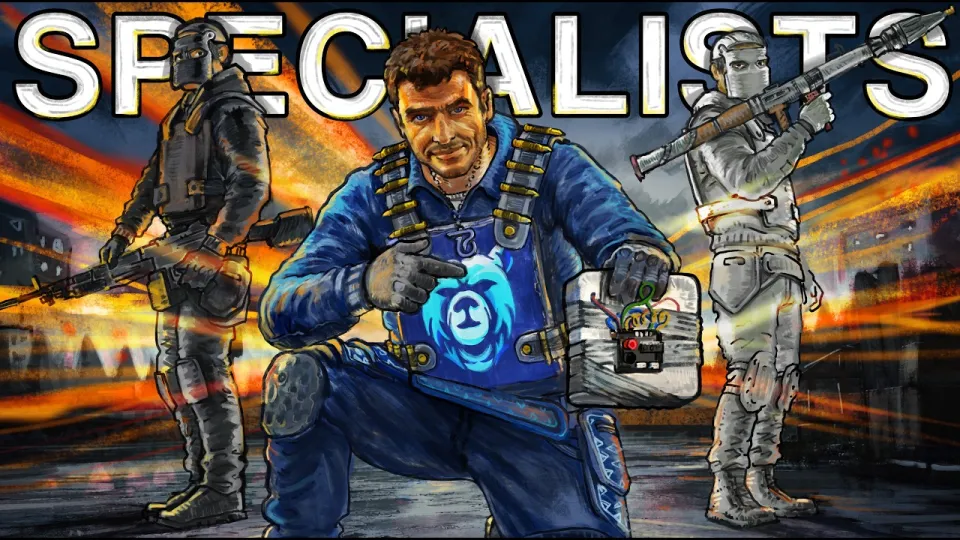
Video: How a 40,000-Hour Trio CONTROLS a SERVER - Rust
Need articles like this for your video? They help promote it on YouTube and Google — order them in the Telegram bot @sat_sit_bot. It writes articles around your video, embeds the video and publishes them on popular niche websites (no ads). Try it free: 50 articles on us.
· based on the channel Blooprint
Key takeaways
- The trio is Blooprint, Disfigure and Nine, with roughly 40,000 combined hours of Rust experience between them.
- The wipe began on a 500+ population server with no grand plan; domination came from early momentum rather than a pre-planned campaign.
- Control came from chaining raids on competing groups, not from farming or holding a single monument.
- The run includes an M2 and L9 roam, a rare sight in a meta where top-tier gear usually stays in the base.
- A horse kickflipping a Minicopter and a raider eating a chimichanga mid-wipe are the moments viewers keep replaying.
A 40,000-hour trio controls a Rust server by converting an ordinary fresh wipe into an early snowball: Blooprint, Disfigure and Nine start with no grand plan on a 500+ population server, stack momentum through fights and fast progression, then raid every competing group before anyone can organize a defense. That is the core thesis of Blooprint's trio wipe, and it is also the most practical lesson in the video for anyone trying to hold ground on a crowded server. You can watch the full run and catch live sessions via Blooprint's Twitch channel.
What the 40,000-hour trio actually is
The number in the title is experience, not a clan tag. Blooprint, Disfigure and Nine are three long-time Rust players whose combined playtime sits around 40,000 hours, and the video frames that familiarity as the real advantage: they read fights faster, waste less time on bad decisions and know exactly which monuments and routes pay off on day one. A trio in Rust is a small unit, so every member has to carry multiple roles — scout, builder, farmer, raider — and the group has to trust those roles without micromanagement.
On a 500+ pop server, that trust matters more than raw aim. A trio cannot out-farm a 12-man zerg, so it has to out-decide it: pick fights that are winnable, take loot without overstaying, and keep the base stocked enough to survive a counter-raid. The video's premise is that this decision-making, built over thousands of hours, is what separates a trio that merely survives a wipe from one that controls it.
How a small group takes over a 500+ pop server
Server control in Rust is not a single event; it is a sequence of compounding advantages. The trio's wipe follows a recognizable progression that any group can study, even if few can replicate the execution speed.
- Fast early progression. On a fresh wipe, the first hours decide who gets guns and who gets raided. The trio prioritizes a compact, defensible starter base and pushes progression toward workbenches and weapons before the population stabilizes.
- Gear through PvP, not farming. On high-pop servers, farming nodes are contested and slow. Killing players who already did the farming is faster, and the video repeatedly shows the trio taking fights to convert other groups' progress into their own.
- Raiding the competition. Once the trio has explosives and scouting information, the target list becomes other established groups — the ones who could eventually threaten them. Removing rivals early prevents a coalition from forming later.
- Holding the map's attention. A group that raids publicly becomes a story on the server. Some players avoid them, others counter-raid, and both reactions are manageable when the base is solid and the team rotates loot quickly.
None of these steps is exotic. What the video demonstrates is the speed of the loop: fight, loot, craft, raid, repeat, with almost no downtime spent on activities that do not feed the next raid.
Base design, skins and the details viewers notice
A trio holding a server needs a base that survives the attention it attracts. The video's build leans on layered defenses, tight loot rooms and a layout that punishes raiders who guess wrong about which wall matters. Viewers also fixate on the black catacomb wall skin, which has become one of the most recognizable base looks in Rust content — cosmetic, but it makes a base instantly identifiable on a crowded map, and identification cuts both ways.
The more instructive detail is economy. A trio cannot afford to waste explosives, and the wipe includes the kind of mistakes every group makes: extra charges placed on a sheet instead of a wall, or a charge spent on an already-broken loot box. Those moments are funny in a video, but they are also the difference between finishing a raid and leaving with half the loot.
Gear fear versus the M2 and L9 roam
One of the most discussed parts of the run is Blooprint roaming with an M2 and an L9. In current Rust, top-tier gear often never leaves the base because losing it feels worse than never using it. Roaming with expensive weapons is a statement: the trio treats gear as a tool for generating more gear, not as a trophy.
The same logic applies to other players on the server, including the river lurkers who roam with an M2 instead of hoarding it. That behavior is what makes a high-pop server feel alive, and it is also why the trio's control is never absolute — a group willing to risk good gear can interrupt any roam. For players learning the game, the takeaway is straightforward: a weapon in a box defends nothing, and the players who use their best gear are the ones who set the pace of a wipe.
The moments that make the wipe memorable
Rust stories live on absurd details, and this one has plenty. A horse kickflips a Minicopter into oblivion mid-fight, a raider delivers a deadpan line about a mouth full of chimichanga right after a full wipe of attackers, and the raid sequences swing between triumph and disaster within minutes. These moments are why a large share of the audience has never installed Rust: the wipe reads as a story with characters, stakes and comic relief.
There is also a nostalgic thread. Long-time viewers note that seeing Blooprint geared and roaming again recalls earlier eras of his content, when risky roams and big fights were the default. Others miss the older trio configuration with Spicy alongside Blooprint and Disfigure, and some ask whether a return to solo-focused series is coming. The video does not answer those questions, but it shows why the trio format remains the most watchable unit in Rust content: three voices, one plan, constant friction.
Common questions about controlling a Rust server
A recurring doubt in the community is whether a sudden jump in skill from otherwise quiet players is legitimate. On high-pop servers, some accounts do switch from passive to aggressive overnight, and while that can look suspicious, it is often just a group that finished progression and finally left the base. The honest answer is that you cannot verify it from a video, so the useful response is to scout, avoid fights you cannot win, and protect your loot rather than argue in chat.
Another common question is whether the current state of Rust is a good time to start. Players who have watched for years without playing often ask this, and the answer depends on expectations: a 500+ pop server is brutal for newcomers, while low-pop or modded servers teach the same fundamentals with less punishment. The wipe in the video is entertainment first and a tutorial second — useful for learning how experienced groups think, not for learning how to survive your first hour.
Useful links
- Blooprint on Twitch — live Rust sessions and the wipes that become videos.
- Blooprint on Kick — alternative stream platform.
- Blooprint on TikTok — short clips from wipes and raids.
- Blooprint on Twitter — announcements and wipe updates.
- Blooprint Discord — community, server talk and group finding.
Final takeaway
Server control in Rust is a byproduct of tempo, not size: a trio with 40,000 combined hours wins by taking fights early, converting loot into raids and never letting rivals stabilize. The wipe in this video is a clean demonstration of that loop on a 500+ pop server, complete with the mistakes, the absurd moments and the gear risks that make it watchable. The analysis and the run itself come from the Blooprint channel, which remains one of the most consistent sources of long-form Rust storytelling. If you want to see the next wipe live rather than edited, head to Blooprint's Twitch and follow along from day one.
Questions & answers
How can a trio compete with larger groups on a 500+ pop Rust server?
By refusing to fight on the zerg's terms. A trio wins through faster progression, better fight selection and early raids that remove rivals before they can organize. Farming contests and open-field brawls against numbers are avoided in favor of quick, decisive engagements and loot rotations.
Is it worth roaming with an M2 or L9 instead of keeping it in the base?
Yes, if the goal is to generate more progress. Gear stored in a box defends nothing, while roaming with top-tier weapons creates kills, loot and map pressure. The risk is real, so experienced players roam with a plan for extraction and a base that can absorb the loss.
What does the black catacomb wall skin change in practice?
It is cosmetic, but it makes a base instantly recognizable on a crowded map, which affects how other groups approach it. Visually distinct builds can attract attention from raiders, so the skin is a style choice with a small strategic side effect rather than a defensive upgrade.
Should new players start on a high-population server after watching videos like this?
Usually not. A 500+ pop server punishes players who are still learning monuments, crafting and combat, and the wipe in the video shows experienced groups exploiting exactly those gaps. Low-pop or modded servers teach the same fundamentals with far less risk, and high-pop can come later.
Source: How a 40,000-Hour Trio CONTROLS a SERVER - Rust · Markdown version